Editing, Leadership and Team Building
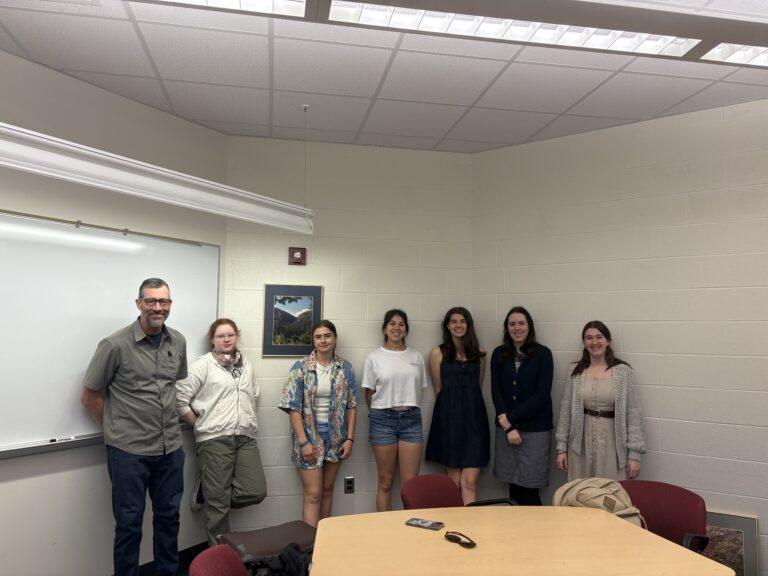
I have learned that starting a student-run newspaper from the ground up is no easy feat. When starting the newspaper, I explored options and began emailing teachers, expressing my interest in journalism. I soon learned that there was a journalism course that was reserved for seniors— it was solely online and produced a handful of articles each spring semester. In my sophomore year (2023-2024 academic year), this course was discontinued due to school funding cuts. I recruited two friends who expressed interest in writing (along with the possibility of a paper) and we decided to develop a new, entirely student-run, newspaper.
Garnering administrative support
In the spring of my sophomore year, I connected with the school administration to explore options. The administration was very supportive of the work, but acknowledged that there would be no funding. With an administrative change over the summer, we finalized the proposal with the new principal in the Fall of 2024.
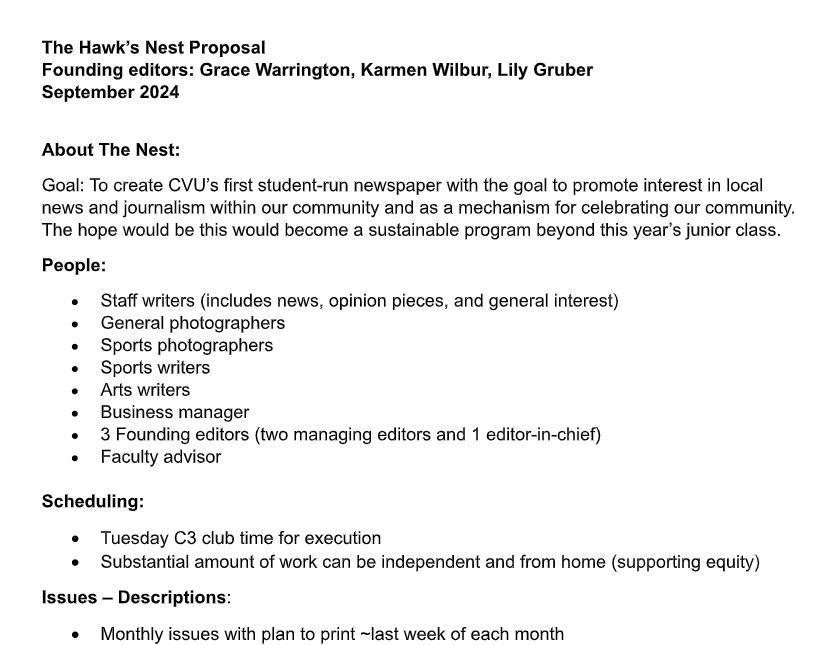
Our very first proposal. Notice we hadn’t finalized the spelling of the newspaper’s name yet.
In addition, the school requires that any school-related activity be an in-person club with a faculty advisor. As such, we needed to recruit a faculty member. An English teacher, Justin Chapman, had run the journalism course in the past and graciously agreed to serve as our advisor under one condition: that this was entirely student-led.
Planning
My two fellow managing editors and I spent the summer after our sophomore year envisioning what this newspaper could be. (Please refer to the Design tab for further elaboration). We decided on a print newspaper, as I had hoped this medium would make the paper more visible in our community. I wanted the look and feel of a traditional school newspaper, so I investigated local printing options. However, I soon learned that local printing was prohibitively expensive, but an online resource “MakeMyNewspaper” offered both publishing software and an affordable solution for printing. I secured private donations to support the work over the first year.

Recruiting, reporting and publishing
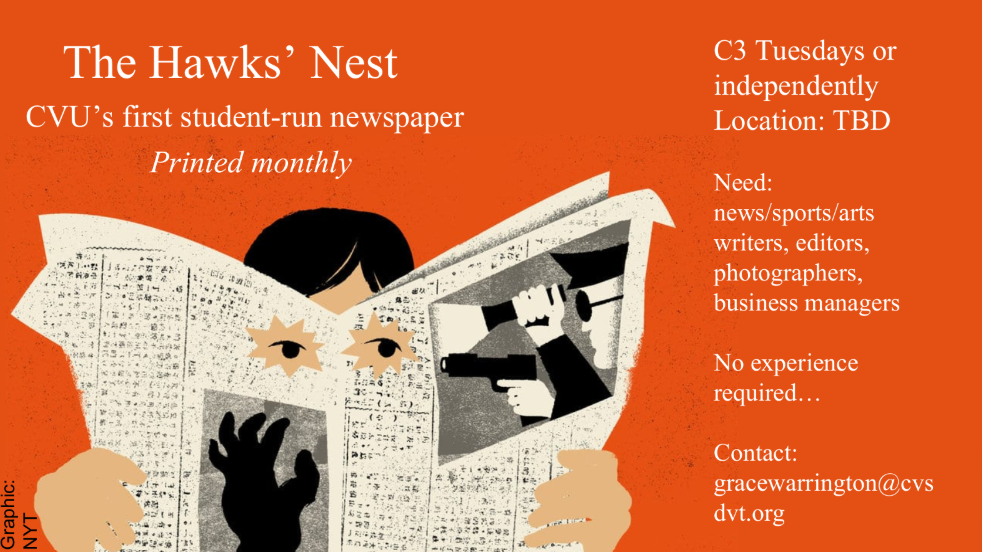
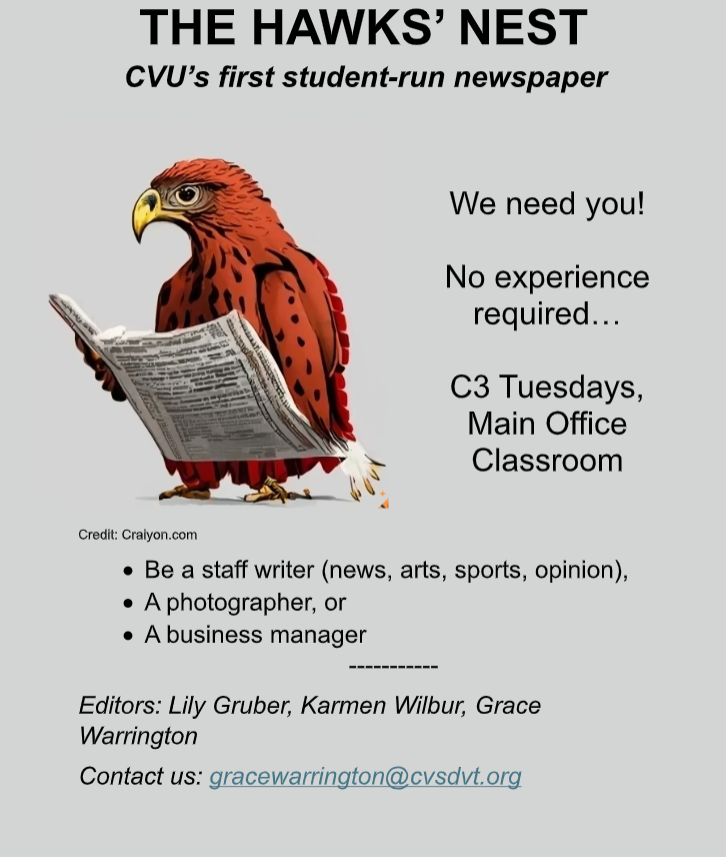
At the start of my junior year, I developed promotional material to recruit contributors. My fellow managing editors and I actively recruited staff writers, photographers, and fellow editors at the school’s annual club fair and publicized our new club through posters distributed around school, slide shows, the principal’s weekly newsletter, and through word-of-mouth. Although initially I had to use my school email, we soon had a standard email for the Editorial Board to use.
To keep costs down, we decided to limit the production run to four hundred copies, representing about a fifth to a quarter of our CVU community of students, faculty and staff. I distinctly remember receiving the first box of newspaper issues, delivered to my house. Although I detest getting up any earlier than necessary in the morning, I eagerly headed to school the following morning to distribute copies to teachers’ mailboxes to be further disseminated during Advisory time, as well as distributing them to the library and front desk. For each issue, I sent a digital copy to our principal who graciously included it in her weekly report for visibility to the wider CVU community of family and friends.
Compilation of issues
In our first year, we printed six issues, distributing them around the school and through an online PDF. Now, one half of the way through The Hawks’ Nest’s second year, we have published and distributed three new issues with a fourth on the way. Through these endeavors, we have produced 88 articles total: 61 for year one, 27 so far for year two. Each issue has a lede and a feature article on the front page. I designed the issues to routinely have a sports page, an arts page, and a back page with lighter content such as an advice column. Opinion pieces and Teacher Features are also common.
Staffing and Team Development
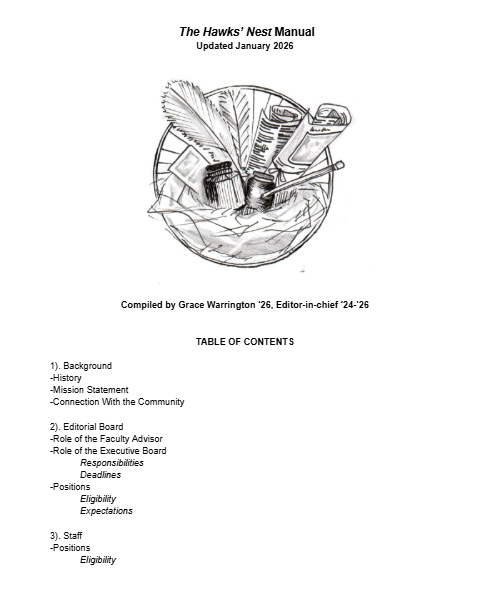
In the first year, much of my effort centered on staff recruitment and encouraging writers to complete reporting and writing in a timely manner. Early on, I sought to model to staff how to write a proper article and to fill in significant gaps in content and outreach. To ensure we had sufficient material, I often ended up writing more often than intended such that by the end of the first year, I had contributed nearly half the articles. In our second year, however, we have been far more successful in writer engagement. A large part of this is that incoming freshmen learned early on that there was an established newspaper and thus felt satisfied in joining a robust, already-existing activity. While we have had a consistent collection of individual contributors, ranging from seventeen to 21 per issue, participation has been remarkably different in this second year. As a result, I have contributed to fewer than one in five articles this year. To build confidence and drive engagement, I created training material and resources for staff writers.
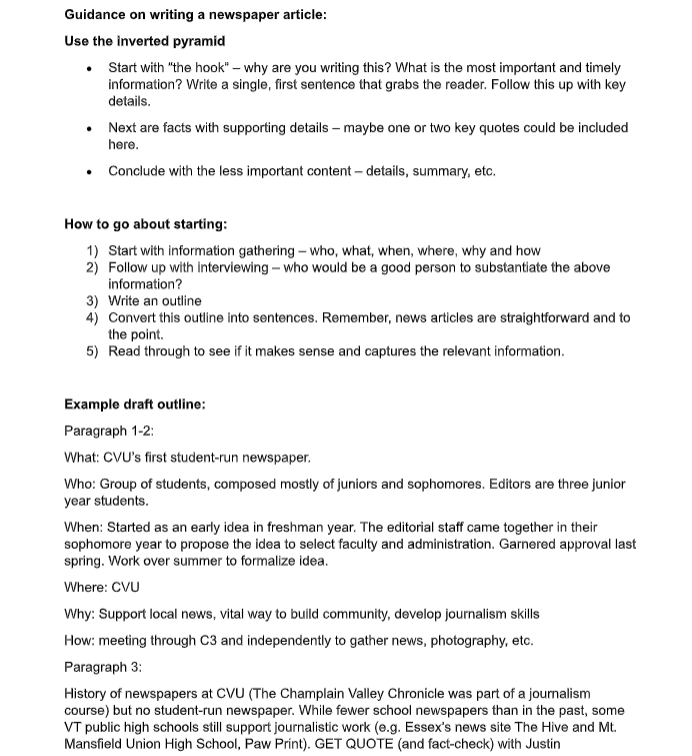
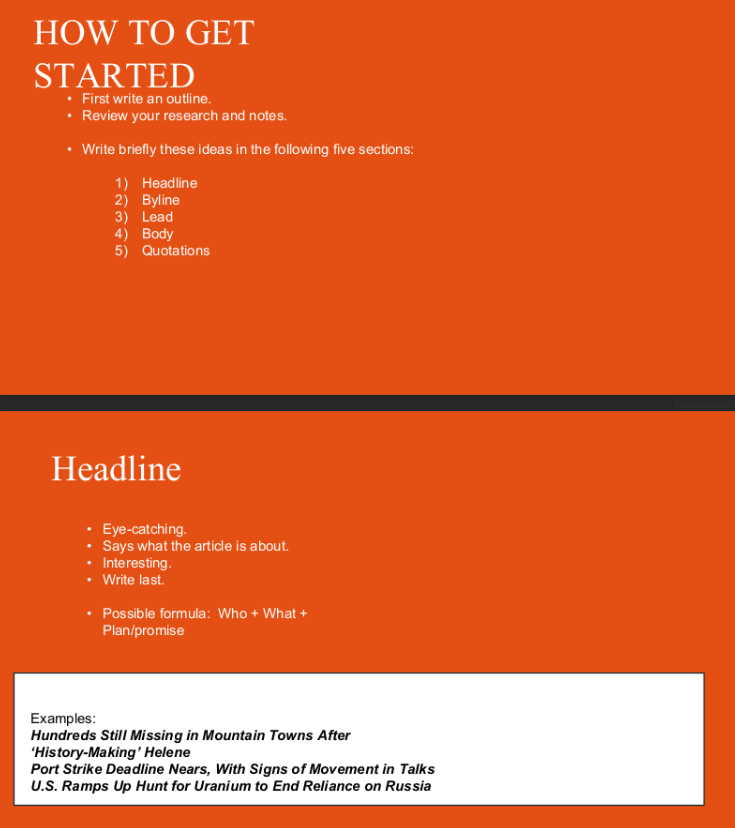
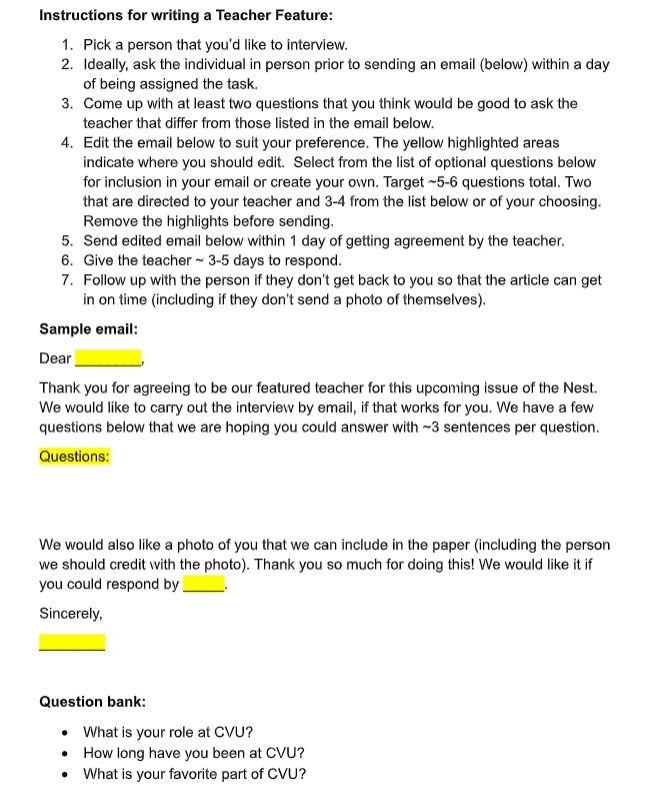
I also developed a set of standard questions for our Teacher Features, which allows this to be a fairly easy way to write an article (see the example on the first page) and a good way to introduce new writers to the process. Upcoming training documents include: “Management Guide for the Editor-in-chief,” “How to Conduct an Interview,” “How to Write an Article,” “How to Title an Article,” “Photography Guidelines,” and “‘What do I Write About?’”
Course credit
Although both editors and writers are strengthening their writing skills with each issue, The Hawks’ Nest has been run as a school club rather than as a school course. Over the past several months, I have been working with the Program Director for NEXUS, a personalized learning program at our high school, to develop a course for future staff writers and editors to obtain course credit for their work. Working with the Program Director, I am planning out multiple layers of course credit to optimize flexibility and engagement. I am also in the process of writing a guidance document that will serve as a course syllabus for future contributors.
Editing
In our first year, I directly edited each article that was published (around sixty articles). In our second year, a staff editor has additionally contributed to the process of editing. During our club time, the staff editor and I are paired with staff writers to get articles completed more quickly and efficiently. Earlier submissions are generally done by our staff editor, and I field articles closer to the deadline. Google Docs serves as our mechanism for sharing writing and communicating edits. After editing, stories are imported into our publishing software where I perform last-minute copyediting.
Funding
Funding has been an ongoing issue for The Hawks’ Nest. Our private donations fully covered the first year; however, we aimed to be self-sufficient in our second year. In the spring of our paper’s first year, we recruited a business manager. One of our managing editors also was able to sell an advertisement from a local business, which covered the cost of one issue. With the help of our faculty advisor and business manager, we were able to run a Winter Auction in which we fundraised nearly three issues worth of funding (see Marketing and Audience Engagement section). I have applied for two grants from a local resource but have not been successful in garnering funds as yet. Future discussions on the sustainability of our current model will be warranted for the years ahead.